
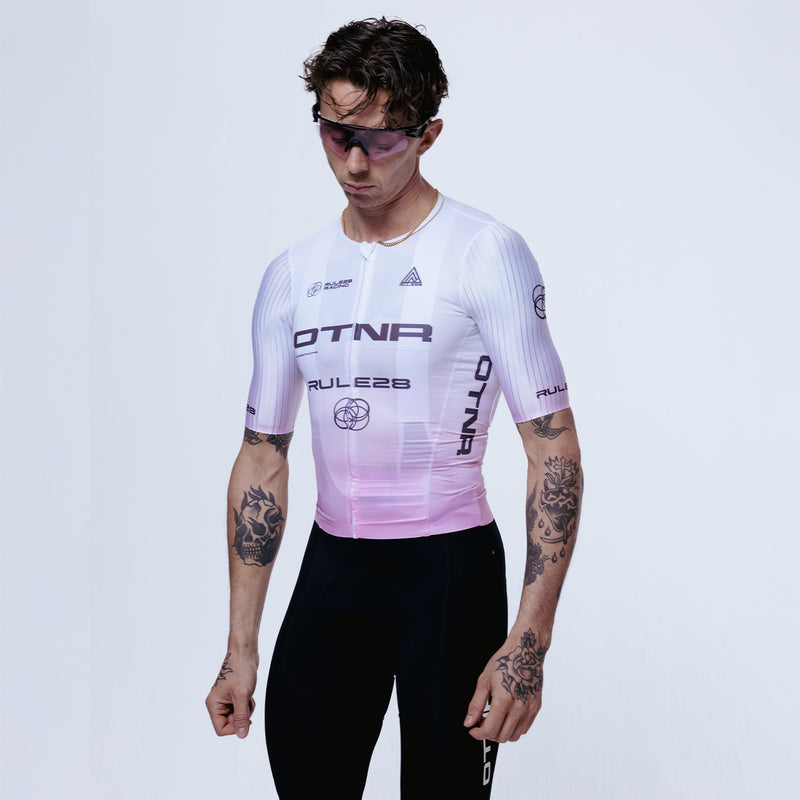
In the world of cycling, the importance of an aero bike jersey cannot be overstated. These garments are meticulously designed to reduce aerodynamic drag, thereby enhancing performance on the road. As cyclists strive for marginal gains, every aspect of their gear, from helmets to shoes, is optimized for speed. Among these, the aero cycling jersey plays a critical role in ensuring a cyclist can move through the air with minimal resistance. This article delves into the science behind these jerseys, exploring how material, fit, and design converge to offer an aerodynamic advantage.
The Importance of Aerodynamics in Cycling
Aerodynamics is a crucial factor in cycling, especially at high speeds. The resistance a cyclist encounters is predominantly air resistance, which increases exponentially with speed. This is why professional cyclists and enthusiasts alike invest in aero bike jerseys. These jerseys are designed to:
- Minimize drag by using smooth, form-fitting materials.
- Enhance airflow over the body to reduce turbulence.
- Maintain comfort without compromising on performance.
Materials That Make a Difference
The choice of material in an aero cycling jersey is vital. Advanced fabrics are employed to ensure that the jersey adheres to the body’s contours while allowing for optimal flexibility and breathability. Key material characteristics include:
- Lightweight: Reduces the overall weight, allowing for faster acceleration and less fatigue.
- Stretchable: Provides a snug fit without restricting movement.
- Breathable: Helps manage moisture and keeps the cyclist cool.
Materials like polyester and elastane blends are commonly used. These materials are engineered to have a low coefficient of friction, which is essential for reducing drag.
Innovative Fabric Technologies
Recent advancements have introduced fabrics with embedded aerodynamic properties. These fabrics are designed to interact with the air in specific ways to further decrease turbulence and drag. Innovations include:
- Textured Surfaces: Mimic the dimples on a golf ball to reduce drag.
- Seamless Construction: Eliminates excess material and potential drag points.
Design Elements Tailored for Speed
Design plays a pivotal role in the effectiveness of an aero cycling jersey. Every element, from the cut to the placement of seams, is strategically crafted. Critical design features include:
- Race Cut: A tighter fit that reduces loose fabric flapping in the wind.
- Longer Sleeves: Extends to the elbow to streamline the arm’s profile.
- Low-Profile Collars: Prevents air from getting trapped and causing drag.
These elements are not just about aesthetics but are primarily focused on function and efficiency. For more information on the latest designs, consider exploring a range of aero cycling jerseys.
Testing and Evaluation
The development of an aero bike jersey involves rigorous testing in wind tunnels and real-world conditions. These tests measure the aerodynamic efficiency of different designs and materials, ensuring that only the most effective solutions are used. Key testing metrics include:
- Drag Coefficient: Quantifies the jersey’s resistance to airflow.
- Airflow Visualization: Uses smoke or dye to observe how air moves over the jersey.
Such evaluations are integral to refining the jersey’s design, ensuring that every cyclist can benefit from cutting-edge performance enhancements.
Conclusion
The science behind aero bike jerseys is a testament to the intersection of engineering, material science, and design. These jerseys are not merely clothing but are sophisticated tools designed to shave seconds off a cyclist’s time. As technology evolves, the pursuit of aerodynamic efficiency continues to drive innovations that empower cyclists to push their limits. Whether competing in a professional race or enjoying a weekend ride, an aero cycling jersey remains an essential component of any cyclist’s kit.